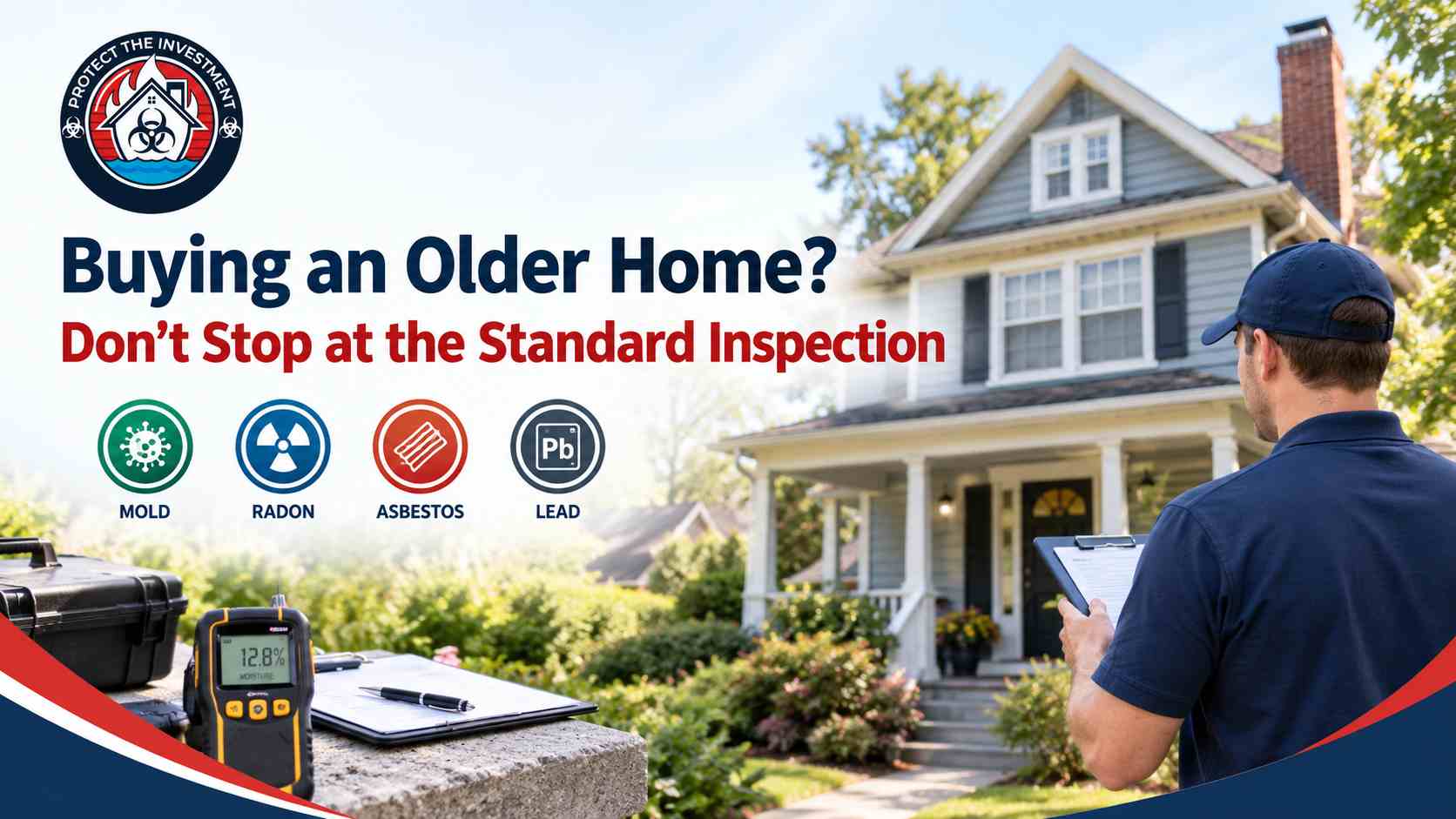
Buying an older home can mean a place with established neighborhoods and a property with history. But on the other hand, it can also mean dealing with old materials and construction. You can get an older home inspection to identify many visible problems, but it may not cover every environmental concern. That is why environmental testing before buying a home can be useful. Depending on the home’s age, condition, history, and indoor environmental hazards. This guide by Ptienviro will help you understand its importance.
What Is Environmental Testing Before Buying a Home?
An environmental inspection before buying a house focuses on potential environmental conditions that may affect the property. A pre-purchase environmental inspection may consider moisture, suspected mold, older building materials, indoor air concerns, or other potential hazards.
Home environmental testing may involve visual assessment, targeted sampling, or laboratory analysis when appropriate. The purpose is not to assume an older home has problems. Instead, a buyer environmental inspection can help answer specific questions that a general inspection may not address.
Environmental Hazards in Older Homes:
The age and history of a property can influence which concerns deserve attention.
Mold and Moisture
Previous leaks, flooding, humidity, and poor ventilation can create conditions that support mold growth. A mold inspection before buying a house may be worth considering when there are musty odors, visible growth, water stains, or a history of moisture problems. A pre-purchase mold inspection can save you from future problems.
Radon
Radon is a naturally occurring gas that can enter a home from the soil. Radon testing before buying a home is essential since it cannot be seen or smelled to determine whether elevated levels are present.
Asbestos
Some older homes contain materials that may include asbestos, such as certain flooring, insulation, roofing, or siding products. An asbestos inspection before buying may be relevant when older materials are damaged, or renovations could disturb them.
Lead
Lead is another consideration in older properties, particularly where older painted surfaces remain. Lead testing in older homes can help determine whether lead-based paint or another potential source is present.
When Should You Consider Environmental Testing?
Not every home requires every type of test. The residential environmental inspection should be based on the property’s age, condition, history, and concerns identified during the inspection.
Additional testing may be worth considering when:
- The property has a history of flooding or water damage.
- Signs of moisture, mold, or persistent musty odors.
- Older materials may be disturbed during renovations.
- Concerns about radon or lead.
- The property’s history raises questions.
Home Inspection and Environmental Testing:
A home inspection and environmental testing are used to understand the property’s condition and serve as home safety testing:
| Standard Home Inspection | Environmental Testing |
| Review the home’s general condition | Focuses on environmental concerns |
| Examines visible components | Involves specialized testing and sampling |
Choosing the right Environmental Testing Company:
Just like everything, choosing the right environmental testing company is important. Buyers considering a Washington, DC home inspection, Maryland home inspection, Northern Virginia home inspection, or Bethesda, MD home inspection may have different testing needs depending on the property. Older homes, in particular, may require additional consideration of moisture, mold, or older building materials. Contact Ptienviro to discuss whether environmental testing may be appropriate for your property.
Conclusion:
A standard inspection is an important part of buying a home, but it may not address every environmental concern. Because older properties may have mold, radon, asbestos, lead, or other hazards, environmental testing before buying a home provides an additional way to investigate specific concerns before you buy. The goal is not to assume something is wrong, but to understand which environmental risks may be relevant to the property. Ptienviro can help you with that.
FREQUENTLY ASKED QUESTIONS: FAQs
What is the biggest red flag in a home inspection?
The biggest red flag in a home inspection is the existence of mold, lead, and asbestos.
What is a common problem in old houses?
Common problems can include structural, plumbing, and electrical issues in an old home.
What is the most important inspection for a house?
The most important inspection for a house is environmental testing to detect issues not visible in a standard inspection.
Is it risky to buy a really old house?
Sometimes, yes. But you should perform all the needed inspections pre-purchase.
What devalues a house the most?
The foundational and structural components of a house devalue it the most.